


A letterbox repair is one of the smallest jobs on a front door, but it solves three common problems. It stops cold draughts, quietens a flap that rattles or sticks, and closes a security gap that most people never notice.
In this letterbox repair guide, we explain how a letterbox works, what usually goes wrong and how to tell a quick fix from a new letter plate. We also cover typical costs, the security upgrades worth paying for, and what to measure before you buy anything.
Most modern front doors in and around Guildford are uPVC or composite, so that’s our main focus. That said, the same checks apply to timber doors too.
How a letterbox works (and why it fails)
A typical uPVC or composite letterbox has four parts. There’s an outer plate with a hinged flap, a sleeve that lines the hole, an inner plate or flap, and the bolts that clamp it all together.
The outer flap is held shut by a small spring. When that spring weakens, rusts or snaps, the flap no longer seals against the plate. As a result, wind pushes it open, cold air pours in, and it bangs every time a lorry goes past.
Other failures are just as common. Plastic hinges crack, chrome finishes pit, fixing bolts work loose, and inner flaps drop off. In addition, thin flaps on cheap letter plates can warp in strong sun on a south-facing door.
Signs your letterbox needs attention
- The flap stays slightly open or flutters when it’s windy.
- You can feel cold air with the back of your hand near the slot.
- It snaps shut so hard that it catches fingers or tears post.
- One end of the plate has dropped, or it wobbles.
- Rust, pitting or flaking shows on the finish.
- The inner flap is missing or hangs loose.
- Post gets stuck halfway, or ends up pushed back out.
Letterbox draughts: cheap fixes that work
A letterbox is a sizeable hole in the busiest door in the house. Even a small gap around a worn flap lets warm air escape, especially on windy days. In fact, the Energy Saving Trust’s draught-proofing advice lists letterbox flaps and brushes among the simple jobs worth doing.
Fit an internal brush or flap
The easiest upgrade is an internal draught excluder. This is a plate with two rows of brushes, or a hinged flap, fitted on the inside of the door. Post pushes through, and the brushes close behind it.
Typically, a decent brush excluder costs £10–£25 and screws on in minutes. However, check the depth first. Some uPVC doors have little room around the slot, so a slim model may be the only one that fits.
Re-seat the outer plate
If you feel air around the edge of the outer plate, rather than through the flap, the plate isn’t clamped tight to the door. Tightening the bolts often cures it. If the plate has warped, though, a new letter plate is the better answer.
When a draught is really a door problem
Sometimes the letterbox gets the blame for a door that has dropped or no longer presses against its seals. If you also feel cold air along the door edges, the letterbox is only part of the story. In that case, our draught and seal repairs usually sort out both at once.
Broken springs: when a letterbox repair means a new plate
A tired spring is the most common reason a letterbox repair is needed. On older brass letter plates, you can sometimes buy a new spring and fit it yourself.
On most modern uPVC and composite letter plates, however, the spring isn’t sold as a separate part. As a result, the practical fix is a new letter plate. The good news is that letter plates come in a handful of standard sizes, so a replacement usually fits the existing hole.
A spring that’s too stiff is a problem too
Springs can fail the other way. A very strong spring snaps the flap shut on fingers and tears post.
It’s hard work for anyone delivering mail, and it wears the flap hinge out faster. A balanced spring, or a soft-close flap, is kinder to everyone.
Quick checks before you replace anything
- Tighten the fixing bolts from the inside, without overtightening plastic plates.
- Brush grit and cobwebs out of the flap hinge.
- Add a drop of light oil to metal hinges, then wipe off the excess.
- Check that the flap sits flat, because a warped flap won’t seal.
- Open and close it ten times to see whether it sticks.
If the flap still won’t close after that, the spring or hinge is worn out. At that point, a new plate is the sensible letterbox repair.
Letterbox security: closing the gap burglars use
Letterboxes aren’t just a draught problem. They’re also a known weak point in door security, and there are two main tricks.
The first is letterbox “fishing”, where a thief hooks keys, bags or parcels through the slot.
The second is more serious. On many uPVC and composite doors, pulling the inside handle down opens the door unless it has been locked with the key. Unfortunately, a tool fed through the letterbox can reach that handle.
Habits that cost nothing
- Always lift the handle and turn the key, even when you’re at home.
- Keep keys, car fobs and handbags well away from the door.
- Never hang a spare key on a hook within reach of the slot.
- If you have a thumb-turn lock, check how close it sits to the letterbox.
Hardware that helps
A letterbox cage or guard sits over the inside of the slot. Post drops into it, but arms and tools can’t reach up to the handle. Similarly, a deflector plate stops anyone peering straight into your hallway.
For a bigger upgrade, look for a letter plate tested to TS 008. This is a door hardware standard for letter plate security, designed to stop tools being fed through to the handle or lock. Secured by Design, the police-backed security initiative, refers to it in its door security guidance.
Finally, if you’re replacing the whole door, ask whether you want a letterbox in it at all. A wall-mounted or gate-post box removes the weak point completely.
Want a warmer, more secure letterbox?
We fit letterbox guards, internal brushes and replacement letter plates across Guildford and nearby Surrey villages. There’s no call-out fee and quotes are free, so call or send us a photo on WhatsApp.
Types of replacement letter plate
When a letterbox repair turns into a replacement, the choice is mostly about door type, exposure and how much security you want. Here’s how the common options compare.
| Type | Best for | Draught performance | Security | Typical part price |
|---|---|---|---|---|
| Standard uPVC letter plate | Like-for-like swaps on uPVC doors | Fair, better with a brush | Basic | £15–£40 |
| Telescopic sleeve letter plate | Composite and thicker doors | Good, as the sleeve lines the hole | Basic to good | £25–£60 |
| Letter plate with internal flap | Exposed, windy doors | Very good, with two seals | Basic | £20–£50 |
| TS 008 security letter plate | Anyone worried about letterbox attacks | Good | High | £50–£130 |
| Letterbox cage or guard (add-on) | Extra security on any door | No change | Good | £15–£35 |
Height matters as well. The British Standard for letterboxes recommends a slot height of around 700 mm to 1,700 mm above the ground. So, if yours sits near the floor, moving it is worth considering when the door is next replaced.
What to measure before you buy
- Overall width and height of the outer plate.
- Slot size, measured across the opening itself.
- Fixing bolt centres, meaning the distance between the bolt holes.
- Door thickness where the letterbox sits.
- Colour and finish, so it matches the handle and knocker.
Take photos of both sides of the door as well. That way, a tradesperson can usually tell from a quick WhatsApp message whether a standard plate will fit.
Letterbox repair costs in Guildford
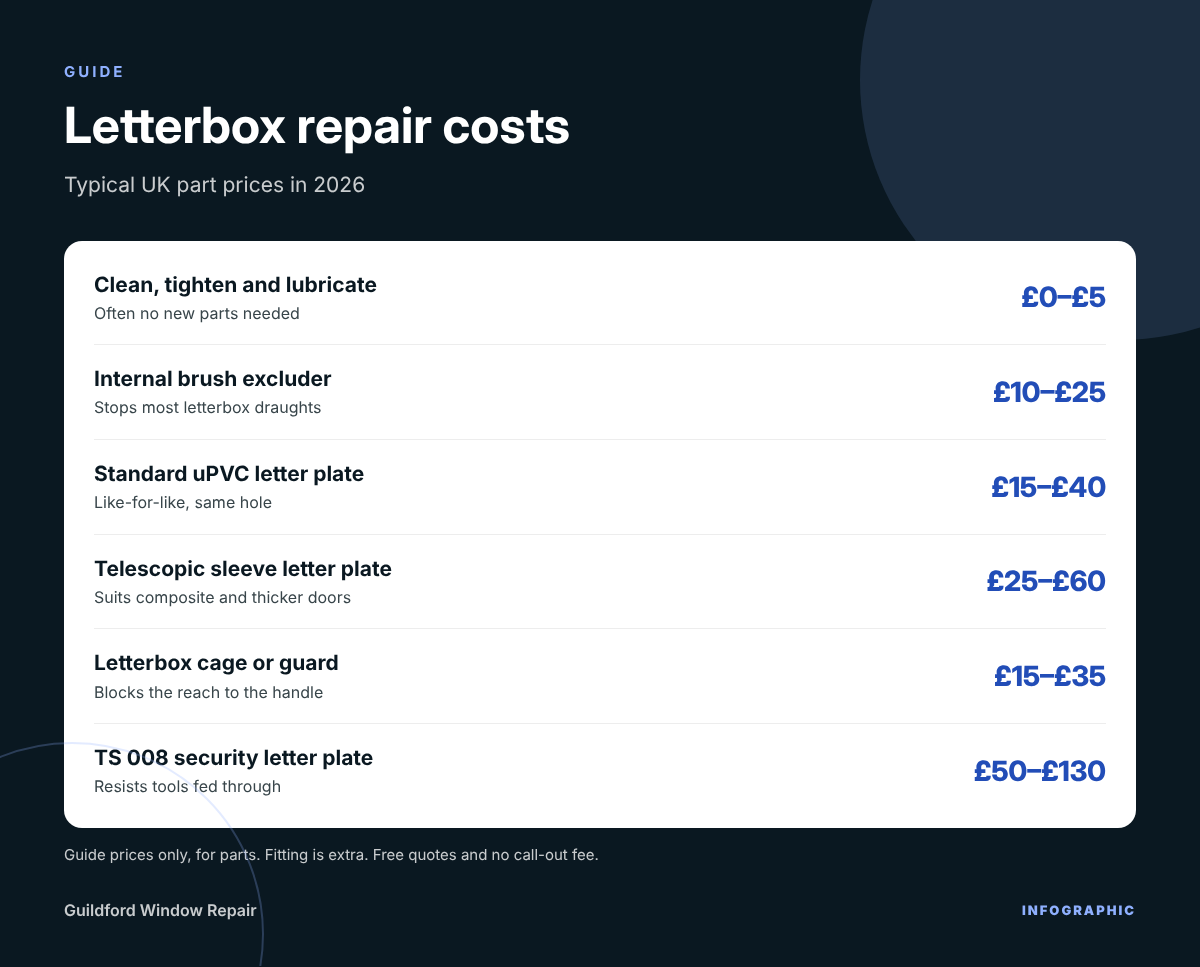
Most letterbox jobs are small, so prices are modest. Here’s what a typical letterbox repair involves, with typical UK part prices in 2026:
- Tighten, clean and lubricate: often no parts needed at all.
- Internal brush excluder: typically £10–£25.
- Like-for-like letter plate: typically £15–£60, depending on type and finish.
- TS 008 security letter plate: typically £50–£130.
- Letterbox cage or guard: typically £15–£35.
Fitting a like-for-like plate is usually a short visit, because no cutting is needed. By contrast, cutting a new slot, moving a letterbox or filling an old one costs more, because the door panel must be worked on with care.
With us, there’s no call-out fee and quotes are free. Also, every repair comes with a minimum 12-month workmanship guarantee, so you’re covered if anything works loose.
DIY or call a pro for letterbox repair?
Plenty of letterbox jobs are fine to do yourself. Fitting an internal brush is a screwdriver job. Likewise, tightening bolts or cleaning a sticky hinge takes five minutes.
However, some jobs are better left to a professional:
- Cutting a new letterbox, or changing the size of the slot.
- Moving a letterbox further from the lock or handle.
- Fitting a letterbox into a glazed panel or a composite door skin.
- Filling an old slot so it’s neat and weatherproof.
- Any job where the door also drops, sticks or won’t lock.
Cutting into a composite door or uPVC panel is a one-shot job. Get it wrong, and the panel may need replacing, which costs far more than the letter plate. So, if in doubt, ask first.
We handle letterbox and door repairs right across the area. For example, we regularly cover window and door repairs in Shalford and repairs in Send. You’ll find every other village on our areas we cover page.
Quick answers
How long does a letterbox repair take?
A like-for-like letter plate swap is usually the quickest letterbox repair, because the existing hole is reused. Adding an internal brush takes minutes. Cutting or moving a slot takes longer.
Can I fit a brush instead of a new letterbox?
Yes, as long as the outer flap still closes properly. A brush stops most draughts. However, it won’t fix a flap that hangs open or a plate that rattles.
Will a new letter plate fit my existing hole?
Usually, yes. Most letter plates come in standard sizes. Measure the slot and bolt centres, or send us photos on WhatsApp, and we’ll confirm before ordering.
Are letterbox cages worth it?
For most homes, yes. They’re cheap, they keep post tidy, and they block the reach to the inside handle. Also, they suit families with pets that chew the post.
Do you repair letterboxes in composite doors?
Yes. Composite doors usually take a letter plate with a telescopic sleeve. We’ll match the size and finish, so the door still looks right.
The bottom line
A good letterbox repair is quick, affordable and noticeable the same evening. The hallway feels warmer, the flap stops banging, and the door is harder to attack.
Start with the free checks, add a brush if you need one, and replace the plate once the spring has gone. If the door itself is dropping or draughty, fix that at the same visit. Our local team is happy to advise either way.
Letterbox or front door playing up in Guildford?
Call us or send a photo on WhatsApp. There’s no call-out fee, quotes are free, and every repair carries a minimum 12-month workmanship guarantee. We also run a 24/7 emergency service.


